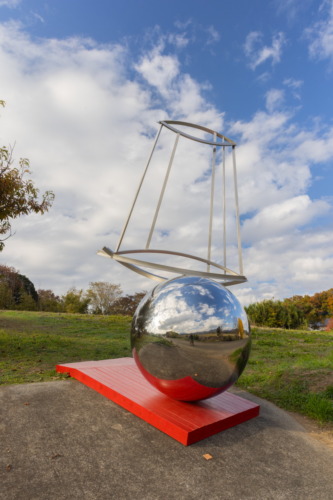
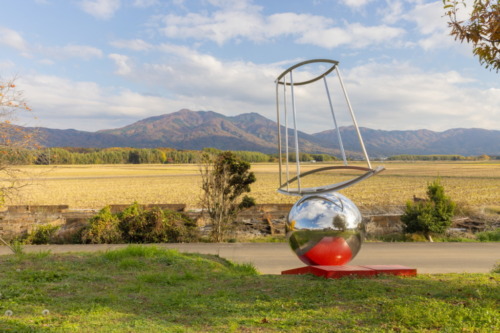
Stainless Steel, Cedar Pillar Lumber, Paint, and Others
210×294×400(h) cm

Stainless Steel, Cedar Pillar Lumber, Paint, and Others
210×294×400(h) cm

Link to: TODA Yusuke Website
| CAREER | 1962 Born in Hiroshima 1990 Musashino Art University Postgraduate course, Fine Art, Sculpture, MA 1994 Japan Air Lines Foundation, “The Sky Day Artists Fellowship” recipient 1995-’96 Studied as JAL Art Fellow in Florence (Italy) and London (UK) 1996 Royal College of Art, Sculpture School, Post Experience Programme (UK) 2000 Japan Foundation, Artists Fellowship for Traveling Overseas recipient (Germany) 2005 Djerassi Resident Artists Program, The 2004 Leah Middlebrook and Norio Sugano Fellowship recipient |
| PERSONAL EXHIBITIONS | 2009 Plaza Gallery, Tokyo (’06, ’01, ’99, ’97) 2005 Gallery GAN, Tokyo (’04) |
| SELECTED GROUP EXHIBITIONS AND OTHERS | 2010 New Heavy in Nogata, Nogata Municipal TANIO Museum, Nogata, Fukuoka Prefecture 2002 Busan Biennale (invited), Busan Metropolitan Museum and Busan Olympic Park, Busan City, Republic of Korea 2001 The 14th Contemporary Sculpture Exhibition of Japan, Ube Open-Air Sculpture Museum, Yamaguchi Prefecture (’91) 2000 The 6th KAJIMA Sculpture Competition, Premium Prize recipient, Kajima KI Building Atrium, Tokyo 1999 Shimanami coastal highway ’99 Sculpture Competition, Grand Prize recipient, Mukai-jima Island, Hiroshima Prefecture 1998 The 15th Kobe Suma rikyu Park Contemporary Sculpture Exhibition, Premium Prize and Tokyo National Modern Art Museum Prize recipient, Suma detached palace Park, Kobe, Hyogo Prefecture 1997 The 3rd Oita Asian Sculpture Exhibition, Grand Prize recipient, Asakura Fumio Memorial Art Museum, Oita Prefecture 1992 The 4th Tokyo Open-Air Contemporary Sculpture Exhibition, Tokyo Metropolitan Governor Prize recipient, Kinuta Park, Tokyo |
| SYMPOSIUMS AND ARTISTS IN RESIDENCES | 2010 The 13th Friuli – Venezia Giulia International Stone Sculptute Symposium (invited), ITALY 2009 The 2nd Penza International Sculpture Symposium, steel sculpture section (invited), Penza, RUSSIA 2006 The 2nd Gwalior Sculptors Symposium (invited), Gwalior, Madhya Pradesh, INDIA 2004 Djerassi Resident Artists Program (invited), Woodside, California, USA 2000 Lapidea 2000 International Stone Sculpture Symposium (invited), Mayen, GERMANY 1998 International Artists Camp in Aso (invited), Oguni Town Aso-county, Kumamoto Prefecture |
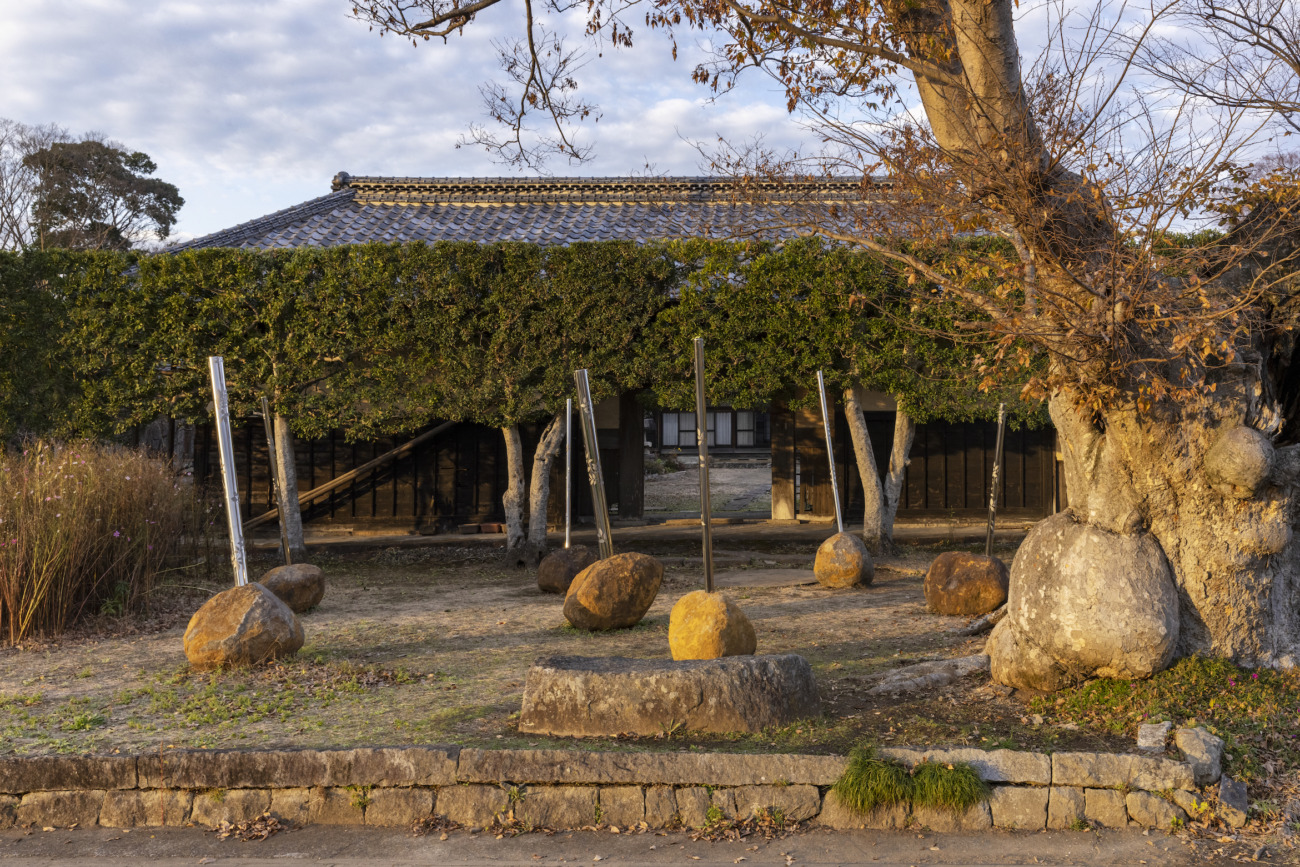
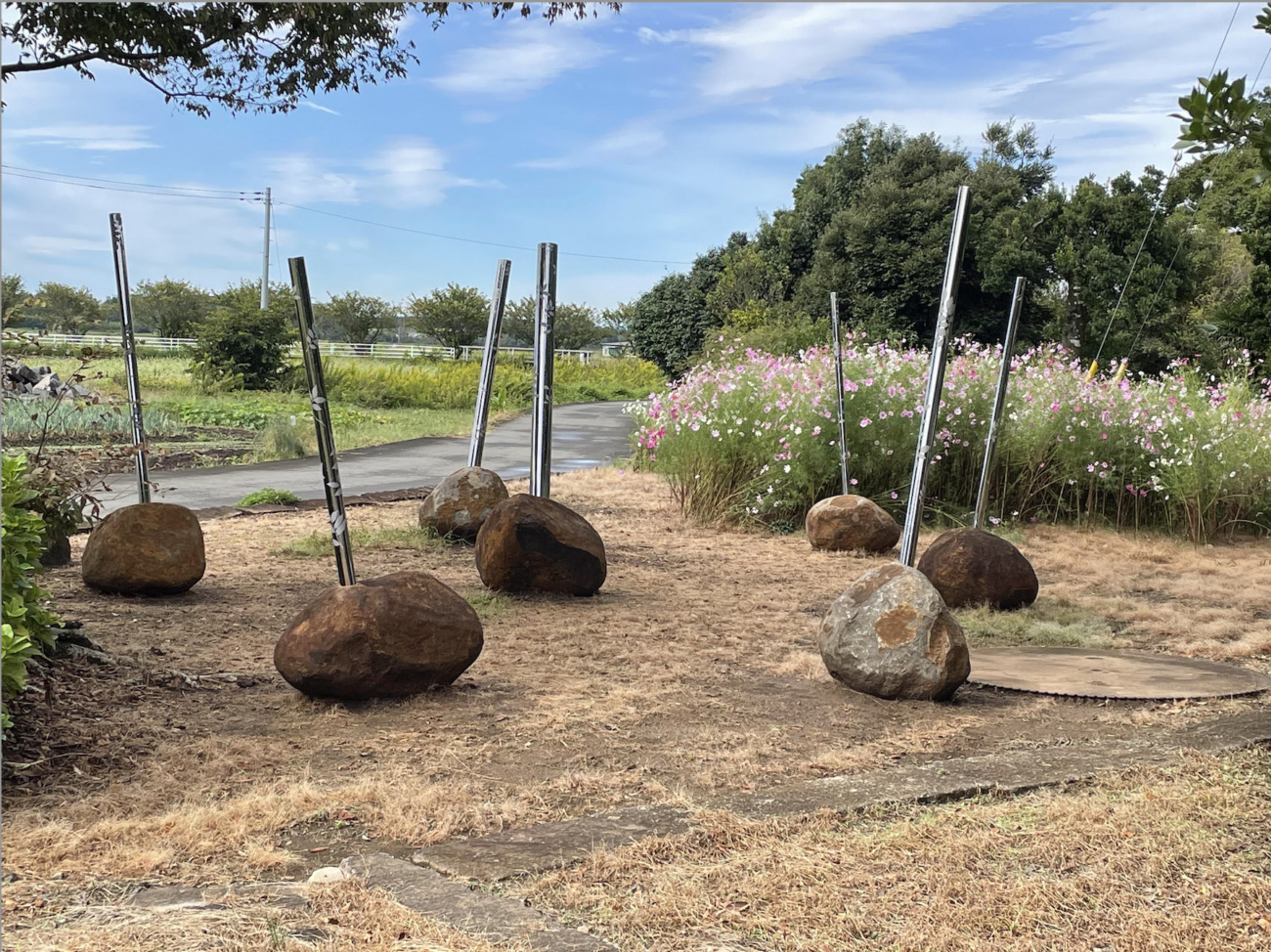
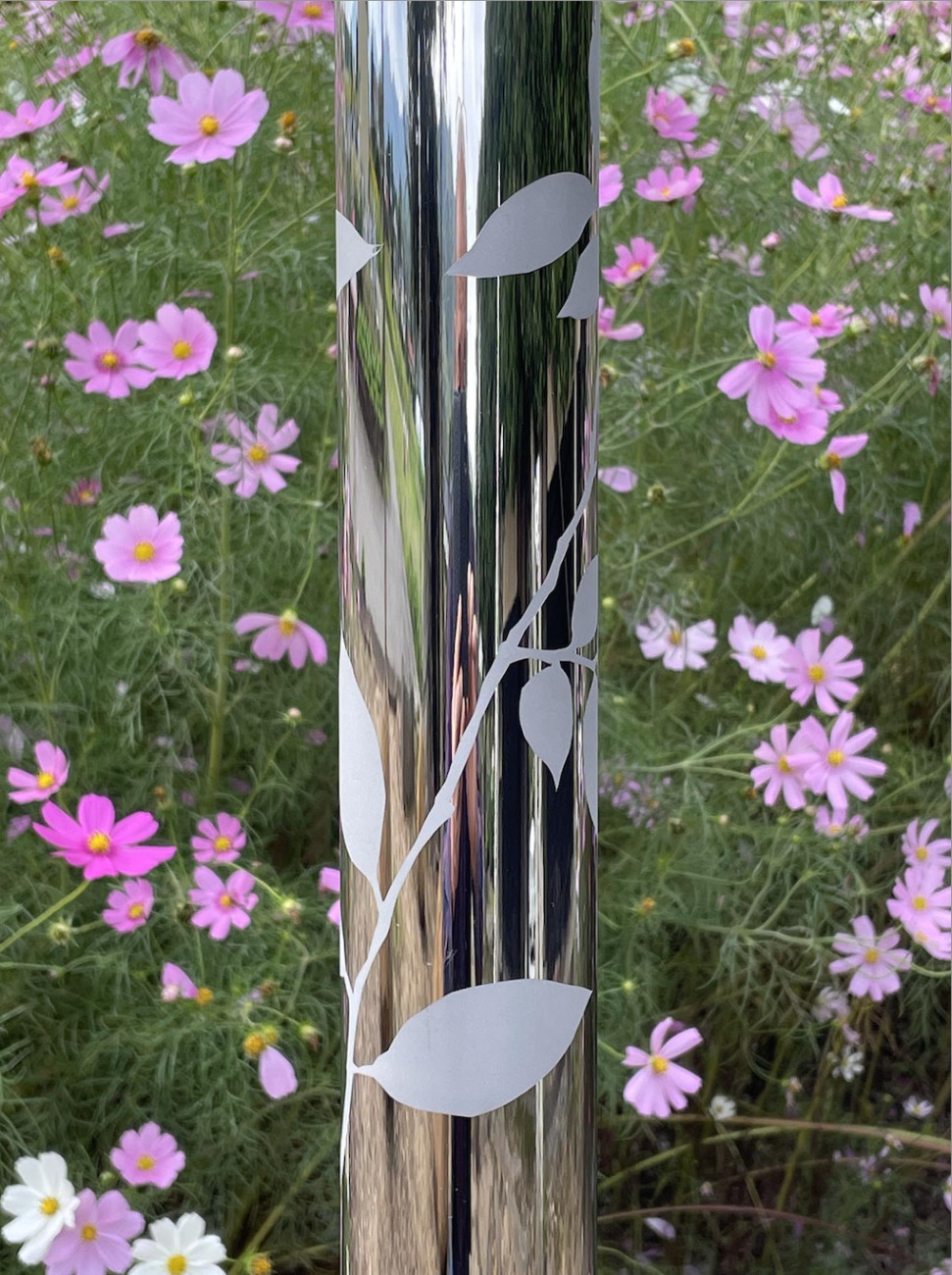
Daté Kan Stone (two-pyroxene basaltic andesite), stainless steel
Exhibition Area(variable) :880 ✕ 660cm
Photo from left : ① 90 × 80 x 242(h)cm, ② 90 X 64 X 220(h) cm, ③ 81 X 80 x 225(h)cm, ④ 118 X 100 X 240(h) cm, ⑤ 88 x 85 X 248(h)cm, ⑥ 88 X 80 x 259(h)cm, ⑦108 X 66 X 219(h)cm
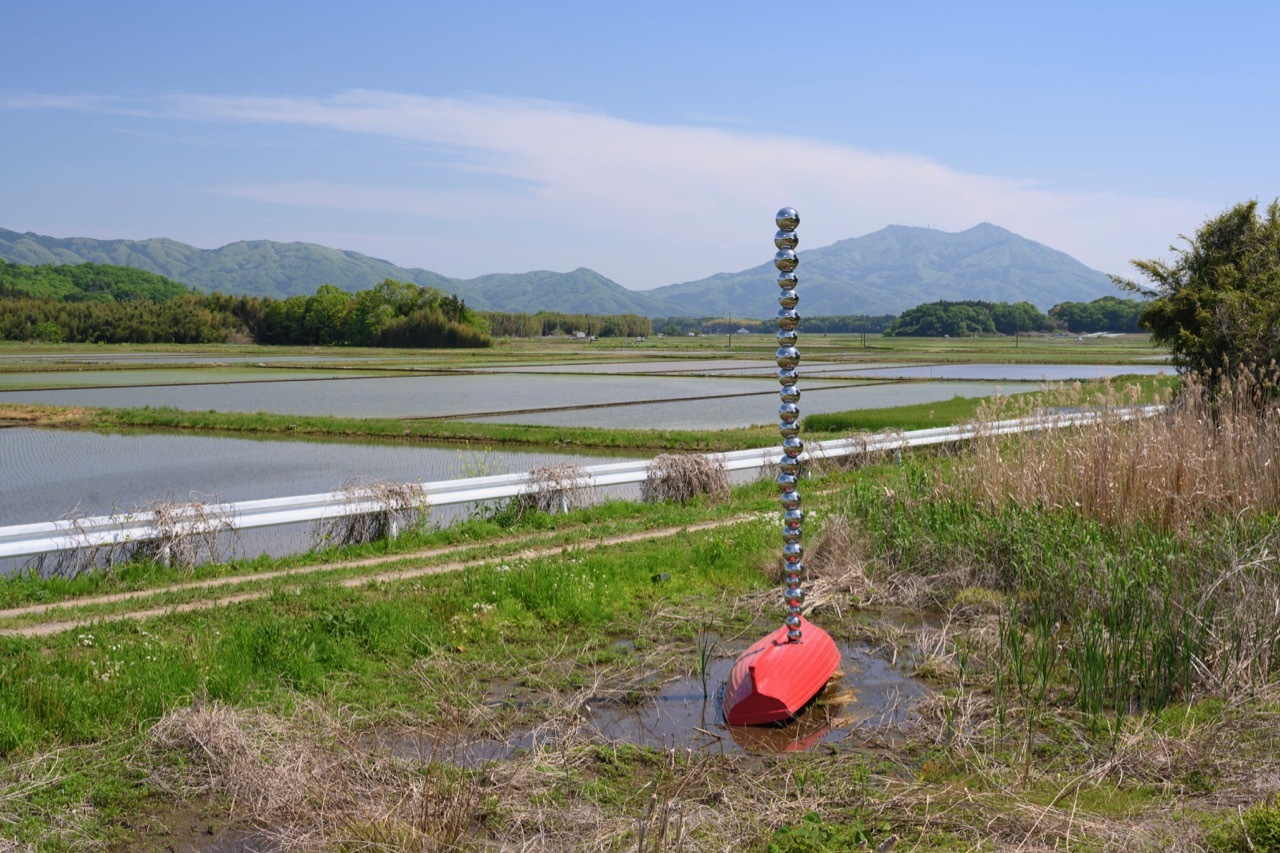
Stainless Steel, Scrapped Wooden, Boat, FRP, and Paint
108×80×196 (h)cm
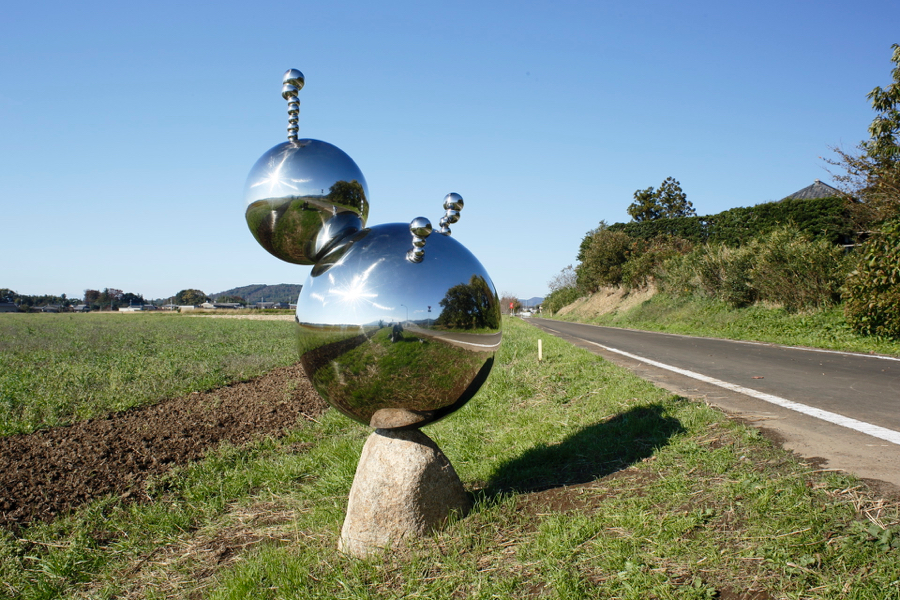
Stainless steel, White granite
108×80×196 (h)cm
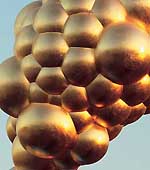
Steel, Brass, Urethane and epoxy coating, Brass leaf, Gold leaf
220×235×540 (h)cm
‘Su-i-do’ is a Japanese word that, up until modern times, was used to mean ‘the natural environment’ and ‘climate’ but here it literally means ‘sui’ (water) and ‘doh’ (earth).
The world we live in is made up of various physical matter, some of which moves slowly and some of which moves at lightening speeds, but all of which is just a transient part of the never-ending cycle.
These instants twinkle here and there.
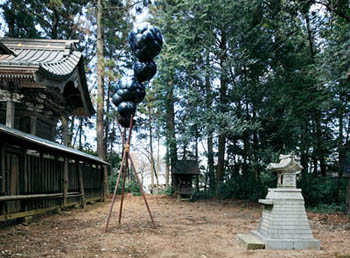
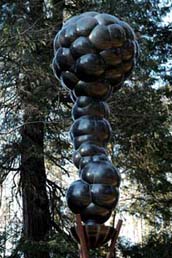
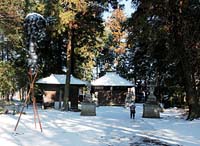
Steel, Sisal hemp rope
L:180×160×500 (h)cm
R:150×140×510 (h)cm
Installation area flexible
If you carefully look around the grounds of the Takaku Shrine, there are so many kinds of secondary shrines, large and small. They probably enshrine local deities, but I was told that nobody now knows when they were built, or why. What’s more, the fact that I created my sculpture here is one more thing that will vanish from human memory. At least, I want to share transient and precious time with our contemporaries.
Steel, Stone (andesite) and Others
200×240×640 (h)cm
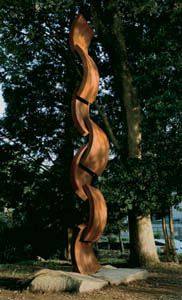
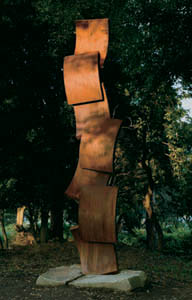
In Nishikata Park, I discovered a tree shadow that was out of balance with its surroundings, making a wild impression. On the ground, rusty metal fragments and concrete chunks protruded.
But the trees I looked up at were stirred in spring by pleasant breezes through their new leaves, the light dapples through them in summer, and their falling leaves dance slowly down in autumn.
I wanted to link the sublime waiting above with the ground.
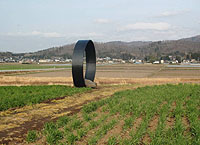
Hon-komatsu andesite, Synthetic rubber, Steel, Wood, Plant seeds, Pieces of old books
180×300×360 (h)cm
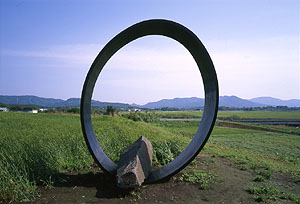
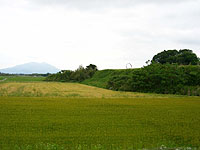
If you stand on the edge of the hill, where pottery fragments of the Jomon period have been unearthed, a scenery of terraced hills that interweaves humanity and nature spreads before you. What did people of the distant past see from this place?
Stuffing the interior of the elliptical ring thickness with full of plant seeds and pieces of paper from a Japanese text on local topography written in the early eighth century. I offered up the sculpture with only the weight of the natural stone at the edge of a barley field. By linking a simple form to the place it stands in, I wanted to call forth the animistic life force that is hidden in the soil.
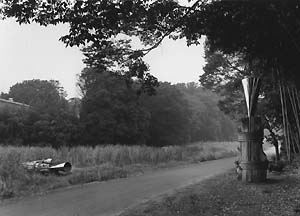
Wood, Stainless steel, Manila-hemp rope, Carbon steel
120×120×400 cm 2500 kg
120×490×145 cm 2200 kg
Installation size changeable
The day I first visited this place, I felt it was an isolated space, despite the bright and open lie of the land. Standing on a road between fallow fields and a bamboo grove, I noticed that all I could see in the distance were the mountains far beyond, and the blue sky. In that moment I had an intense illusion of being surrounded by these cultivated hillsides. I thought “I want to make sculptures here”.
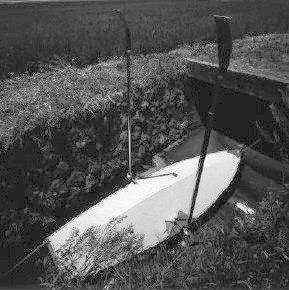
Deserted boat, FRP, Paint, Cloth, Steel, Stainless steel
350×160×320 cm
250 kg
Until now, I’ve kept on making big, heavy sculptures for a long time. In a way, that is my taste, but it’s also the way I work. Nevertheless, it may not be necessary to have size and massive presence to cover some of the themes of my work, which are “Things that can’t be captured in a photo or drawn in a picture”, “Things that can’t be created from a concept alone” and “Things which change the atmosphere of the of the place they stand in”. So, for the last five years I’ve been working simultaneously on very small pieces and pieces which aggressively engage the gallery space. What I’m trying this time at Amabiki Village is of the latter type. I have a renewed sense of the pleasure of feeling and thinking about site-specific “pieces which can only be done here and now”.